How Fan Conversations on Social Platforms Precede Changes in Soccer Point Spreads and Racing Payouts
Katja Werner · Aug 27, 2026
How Fan Conversations on Social Platforms Precede Changes in Soccer Point Spreads and Racing Payouts
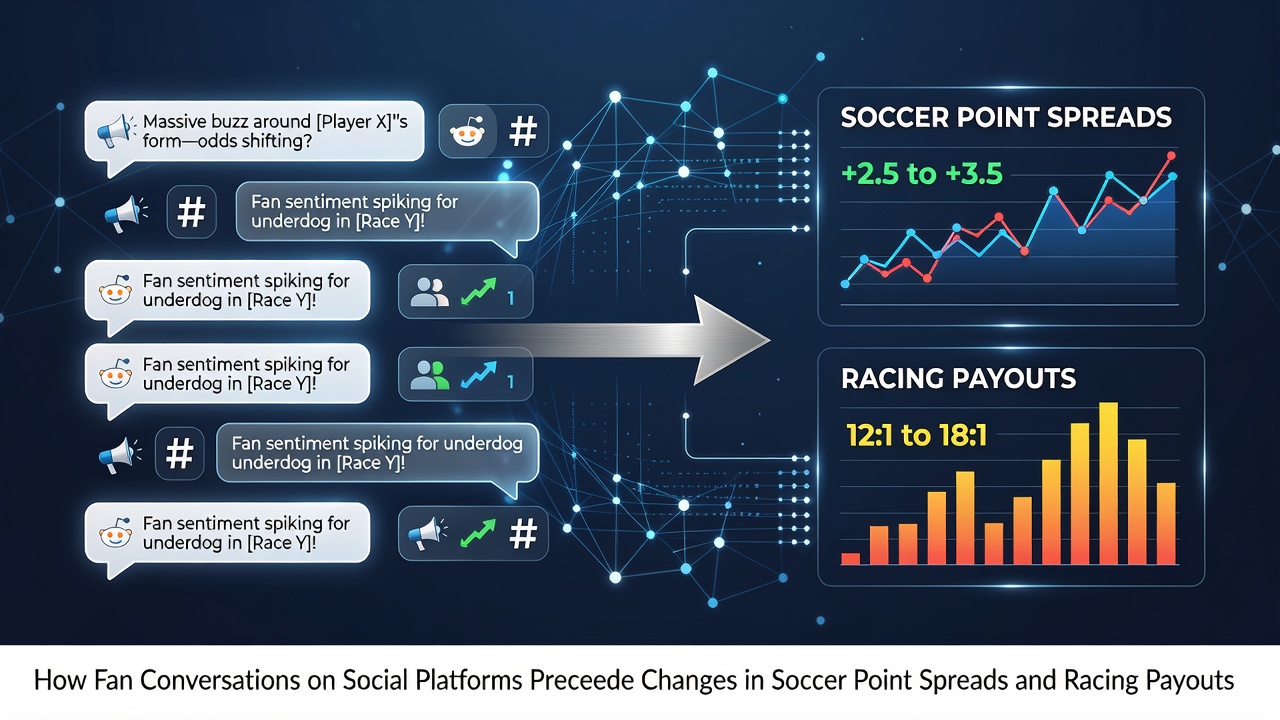
Analysts track how conversations on platforms like X and Reddit generate measurable signals that appear before adjustments in soccer point spreads and horse racing payouts, with patterns emerging from volume spikes and sentiment clusters that operators monitor through specialized tools. Data collected across multiple seasons shows these online exchanges often precede line movements by hours or even days, particularly when large groups of supporters focus on specific players, injuries, or track conditions. Researchers from institutions such as the University of Sydney have documented similar correlations in their studies of digital sentiment and wagering markets.
Social Signals in Soccer Markets
Point spreads in soccer shift when betting volumes react to public sentiment rather than solely to official team news, and observers note that spikes in mentions of a key midfielder's form or a defensive lapse can trigger early movement on platforms that aggregate social data. In August 2026, during the opening weeks of the European season, several high-profile fixtures displayed this sequence where fan threads on Instagram and TikTok highlighted tactical mismatches days before oddsmakers tightened the lines. Those who monitor these trends point to algorithms that scan for keywords and engagement rates, turning raw chatter into actionable indicators that influence how spreads widen or contract in real time.
Take one dataset compiled during the Premier League campaign where clusters of positive posts about an underdog side preceded a three-point adjustment in the spread within 48 hours, while neutral coverage produced no such effect. This pattern holds across leagues because supporters amplify details that bookmakers incorporate into their models, creating a feedback loop where online volume feeds into market pricing. Industry reports from the American Gaming Association highlight how operators now integrate social listening alongside traditional statistics to stay ahead of these shifts.
Patterns Emerging in Horse Racing Payouts
Racing payouts, especially in pari-mutuel systems, respond to late surges in public interest that social platforms capture through hashtags and video shares of morning workouts or stable rumors. Bettors who follow these conversations often see dividends tighten on horses that gain sudden traction online, even when morning line odds suggested different outcomes. Evidence from Australian tracks during the 2026 winter carnival showed that mentions of a jockey switch or track bias posted on dedicated forums preceded pool reallocations that altered final returns by noticeable margins.
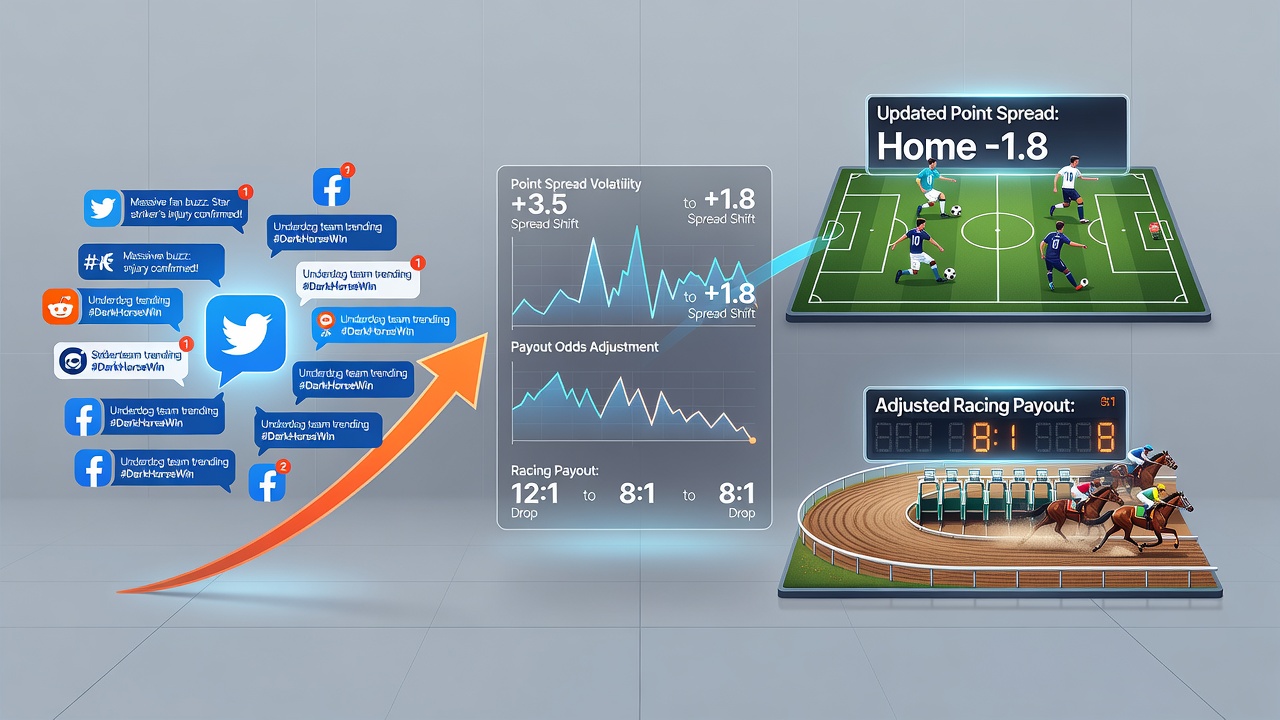
What's notable is how these signals differ from soccer because racing involves larger fields and more variables such as post position or pace scenarios, yet the same principle applies when a viral clip of a horse's gallop draws concentrated attention. Operators adjust tote boards accordingly once the volume registers, and studies from Canadian research groups have confirmed that early social momentum correlates with reduced payouts on popular selections. The process unfolds in layered stages where initial posts spark replies, then betting apps record increased wagers that further compress the odds.
Timing and Market Mechanics
Changes rarely happen instantly because platforms require sustained discussion rather than isolated comments, and analysts observe that meaningful movement typically follows after a threshold of engagement is crossed. In soccer this might involve repeated references to set-piece weaknesses, whereas in racing it centers on trainer comments or equipment changes shared in paddock updates. Data indicates that the lag between peak conversation and line movement averages between four and twelve hours across both sports, giving those who track metrics an edge in anticipating adjustments. Regulatory bodies including the Nevada Gaming Control Board have noted these digital influences in their oversight of market integrity, emphasizing the need for transparent monitoring of sentiment-driven activity.
Yet the relationship stays indirect because not every viral thread produces a payout shift, only those that align with existing betting interest or reveal overlooked factors like travel fatigue in soccer squads or ground condition preferences in racing. Experts at research centers have mapped these interactions through network analysis, revealing that certain accounts act as amplifiers while others simply echo existing views without altering market direction.
Conclusion
The connection between fan conversations and subsequent changes in soccer point spreads and racing payouts rests on observable data patterns rather than coincidence, with platforms serving as early indicators that operators and analysts continue to refine. As digital engagement grows, these signals become more integrated into standard market operations across regions, supported by ongoing studies that quantify their predictive value without replacing traditional handicapping methods.